
Shun Eto
|
|
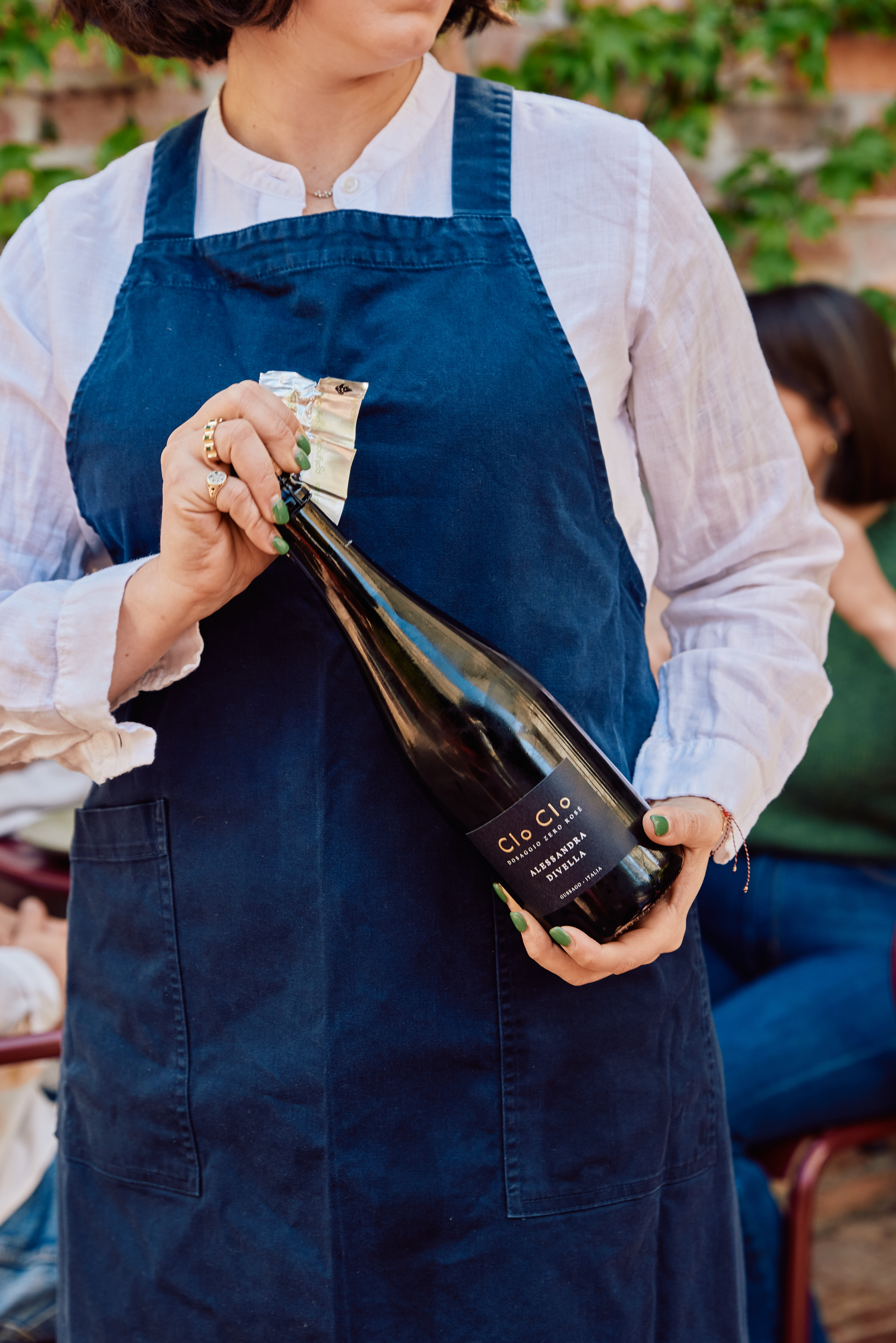
What Ayu does on every order, every COGS, every invoice, every wine. The mechanics behind the platform.
Photography: Parker Blain at Clover, Melbourne.
How Ayu works
Most wine venues run on three financial systems that don't talk to each other.
The POS knows what was sold. The accounting software knows what was invoiced. The Excel sheet (and there is always an Excel sheet) knows what was actually agreed with the supplier. When the three disagree, and they always disagree, somebody spends a Sunday afternoon working out which one is right.
Ayu was built so that Sunday afternoon goes back to whoever it was stolen from.
What Ayu actually does
Ayu is a finance platform built specifically for the Australian wine trade.
Venues use it to cost out wine, place orders, manage POs, and reconcile invoices. Producers use it to manage their on-trade business, get paid faster, and see who is actually buying their wine. Money flows cleanly between the two sides, with WET, GST, and discounts handled in the right order on every transaction.
That's the surface layer. Underneath, every wine added and every order placed builds a clearer picture of what makes your venue unique, and which producers actually serve it well.
The COGS sheet that does its own work
The most detailed Wine GP & COGS sheet in the universe.
Most wine COGS sheets are some version of the same Excel file, copied between venues for years, lovingly maintained, and quietly wrong by 5 to 20 percent. In some venues, more.
Ayu's wine GP and COGS sheet works differently. Every SKU. Every landed cost. Every margin. Tracked automatically, updated in real time as prices, vintages, and discounts change. WET, GST, freight, and case discounts resolve in the right order without anybody having to remember the order.
The reason this hasn't existed before is structural. Generic POS and inventory systems treat every SKU as a stable record with a price. Wine SKUs aren't stable. The same wine from the same producer changes vintage, vintage changes pricing, pricing flows through WET differently to GST, and case discounts apply retroactively across the order rather than to the line item. Ayu's data model treats every SKU as a relationship between a producer, a vintage, a tax category, and a discount schedule. Not a flat record. That's the structural difference. That's why generic tools treat wine as an afterthought rather than a category.
When the Yarra Valley pinot you ordered last quarter goes up by 8% on the next invoice, Ayu surfaces it before the invoice gets paid. Not after the month-end stocktake.
Purchase orders, automatically
Every order on Ayu generates a purchase order instantly. No manual entry. No paperwork going missing in someone's email. No chasing your team.
Discounts are clearly marked on the PO. The 10% case discount you negotiated with the producer last week shows up on the document the producer receives. Nothing falls through the gap between what was agreed in person and what gets charged on the invoice.
Order from all your wine suppliers at once
Most wine programmes order from up to 25 wineries and distributors in a typical week. Doing that on email, texts, WhatsApp and spreadsheets is a Tuesday afternoon by itself.
On Ayu, you place one order. The platform splits it into individual purchase orders for every winery and distributor involved, sends each one through the right channel, and tells you in real time whether you've hit each supplier's minimum order, freight threshold, or case discount tier.
No more emailing twenty-five producers separately. No more discovering at delivery that you were three bottles short of the case discount on a wine you would have happily added. One order in, all the right orders out, all the maths handled before you hit send.
Invoice matching, by AI
When the invoice arrives, Ayu matches it to the purchase order automatically.
When something doesn't match, you get a clear reason why. Quantity off? Discount missing? Freight charge that wasn't mentioned? Ayu surfaces it as a structured exception. You go back to your supplier with specific items to resolve. They come back with answers. Both sides save time.
Where AI fits
AI is part of why we built this now and not five years ago. The honest version of what's coming for our trade is this: AI will be applied to hospitality whether we participate or not. Most of the early applications will be lazy. Chatbots that pretend to be sommeliers. Generative marketing copy that all sounds the same. AI sommelier apps trained on Wikipedia and a thousand wine descriptions scraped off the internet.
We're not building any of that. We're interested in the part AI is genuinely good at, which is taking the administrative weight off people who should never have been carrying it. The COGS reconciliation that ate your Sunday. The invoice mismatch that cost you a Tuesday.
AI cannot replace what a sommelier does on the floor, and shouldn't. AI can absolutely replace what a sommelier is doing on a spreadsheet at 11pm, and should. That's the foundation that Ayu was built on.
Built for the way Australian wine actually works
The Australian wine trade has its own financial logic. WET sits between wholesale and GST, not bolted on at the end. Producer rebates change pricing across channels. Volume discounts kick in retroactively. Freight gets allocated unevenly across mixed cases. Generic ordering platforms can't model any of this without breaking the maths.
Ayu was built specifically for this trade, by people who have worked it from both sides.
"The people doing the work in wine deserve better tools. That's the whole company."
What you get back
Time. Margin. Trust with your suppliers. A finance system that tells you what's actually happening in your wine program, rather than asking you to reconstruct it on the weekend.
The POS, the accounting software, and the Excel sheet have had long enough. Move over. Ayu is here.